
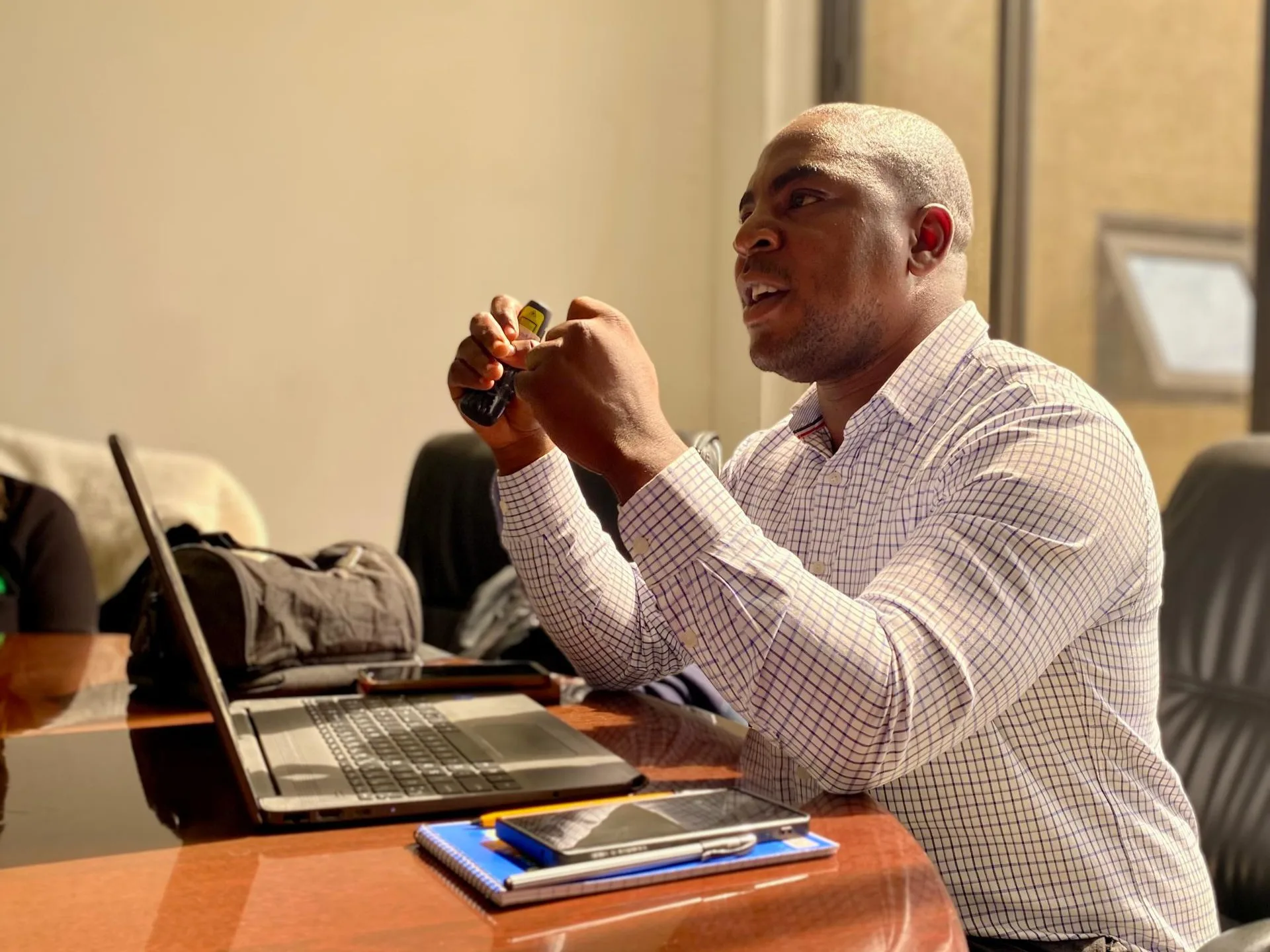
Wildlife Crime Prevention’s (WCP) Environmental Crimes Journalism Fellowship is designed to equip Zambian journalists with the technical knowledge and investigative skills needed to report on complex ecological issues. By bridging the gap between scientific research and public communication, the fellowship empowers young media professionals to scrutinise environmental governance and advocate for the protection of Zambia’s natural heritage.
The third cohort of the fellowship recently concluded a transformative two-day field visit to Chirundu and the Lower Zambezi National Park. This excursion moved the learning process from the classroom to the field, allowing fellows to witness firsthand the delicate balance between conservation and industrial development. The visit served as a practical introduction to the realities of managing protected areas and the sophisticated challenges posed by extractive industries.
The visit was an important activity for the cohort, representing their first practical exposure to the realities of environmental governance in Zambia’s protected areas. It was designed to deepen their understanding of the science behind mining and its ecological consequences and connect them with the people and institutions working at the intersection of conservation, community, and policy.
The training component of the visit was facilitated by Ecologist Patrick Mulenga from the Department of National Parks and Wildlife, who walked the fellows through the environmental mechanics of mining and what it means when extractive activity takes place inside a protected area, such as the Lower Zambezi National Park.
His presentation gave the journalists a grounded, technical foundation, covering everything from how open-pit mining reshapes the landscape and disrupts underground water sources, to the ways in which secondary infrastructure, such as access roads and waste facilities, can fragment wildlife corridors and sever the seasonal migration routes that animals have followed for generations.
Mr Mulenga described the park as an irreplaceable wildlife haven for elephants, wild dogs, lions, and leopards that depend on an uninterrupted Zambezi riparian corridor, bordering the Mighty Zambezi river.
“Fragmenting this ecosystem would disrupt vital seasonal migrations and dismantle centuries of natural evolutionary stability,” he said.
He also highlighted what he called permanent physical havoc from open-pit copper mining, warning that the activity causes irreversible scars on natural landscapes by systematically stripping forests, eliminating topsoil, and disrupting original aquifers.
“Once topographies are structurally altered, restoring native ecosystems to their original state becomes nearly impossible, leaving toxic geological waste in perpetuity,” he noted.
For many of the fellows, it was their first structured engagement with the science of mining impacts, and it provided them with a clearer way to approach future reporting on environmental crimes.
Following the technical training, the fellows visited Conservation Lower Zambezi (CLZ). Since its founding in 1994, CLZ has been a cornerstone of the region’s ecological management, working with the government to oversee one of Zambia’s most significant wilderness areas. The fellows explored the organisation’s core pillars of wildlife conservation and anti-poaching operations, observing how their efforts support a thriving tourism economy that provides over a thousand local jobs and secures food security for downstream communities.
The visit to CLZ gave the fellows an up-close understanding of what long-term, community-anchored conservation looks like in practice. They learned how the organisation supplements government capacity to manage wildlife areas and how it has worked to ensure that conservation translates into tangible economic benefits for local communities.
Ecotourism in the Lower Zambezi supports more than a thousand permanent local jobs and generates consistent foreign exchange earnings, a model that demonstrates how protecting nature and growing an economy are not mutually exclusive pursuits.
The fellows also learned how CLZ supports downstream fisheries and agricultural food security, reinforcing that the value of a protected ecosystem extends far beyond what can be seen from a safari vehicle.
The timing of the field visit was particularly relevant. Zambia is at a significant economic juncture. The government has made no secret of its ambition to expand the country’s mining sector, recognising the enormous mineral wealth that lies beneath Zambian soil as a critical driver of national development, revenue generation, and job creation.
Copper, in particular, remains central to Zambia’s economic identity, and there is a legitimate and understandable push to ensure that this natural wealth is harnessed to lift communities and strengthen the nation’s fiscal position. As global demand for copper and other critical minerals continues to grow, driven in part by the worldwide shift toward clean energy technologies, Zambia finds itself holding resources the world urgently wants.
That context makes the conversation around mining in or near protected areas not one to be dismissed but one to be approached with care, rigour, and the full weight of evidence. The question is not whether Zambia should mine. It is how it does so and where. Protected national parks represent not only irreplaceable ecological heritage but also functioning economic assets. When properly managed, they generate revenue, sustain communities, support fisheries, and anchor tourism industries that benefit local and national economies alike. Ensuring that mineral extraction, where it occurs, is done in full compliance with environmental law and with robust independent oversight is therefore not an obstacle to development; it is a condition of it.
This is precisely the kind of nuanced, evidence-based understanding that the Environmental Crimes Journalism Fellowship seeks to build in its fellows. Environmental journalism in Zambia has never been more consequential. As decisions about land use, mineral licensing, and protected area governance are made at the highest levels, a well-informed press corps capable of asking the right questions, scrutinising regulatory processes, and holding institutions accountable becomes an essential part of ensuring that those decisions serve the long-term national interest.
For cohort three, the two days spent in Chirundu and at Conservation Lower Zambezi planted seeds that will shape their reporting for years to come. They returned not with alarm or outrage, but with knowledge, an understanding of the ecosystems at stake, the institutions working to protect them, the economic value embedded in healthy landscapes, and the legal frameworks that must be strengthened to ensure that Zambia’s development ambitions and its conservation commitments grow together, not at each other’s expense. It was, by every measure, a first field visit worth remembering.
0 Comments