
By Mirriam Nasilele
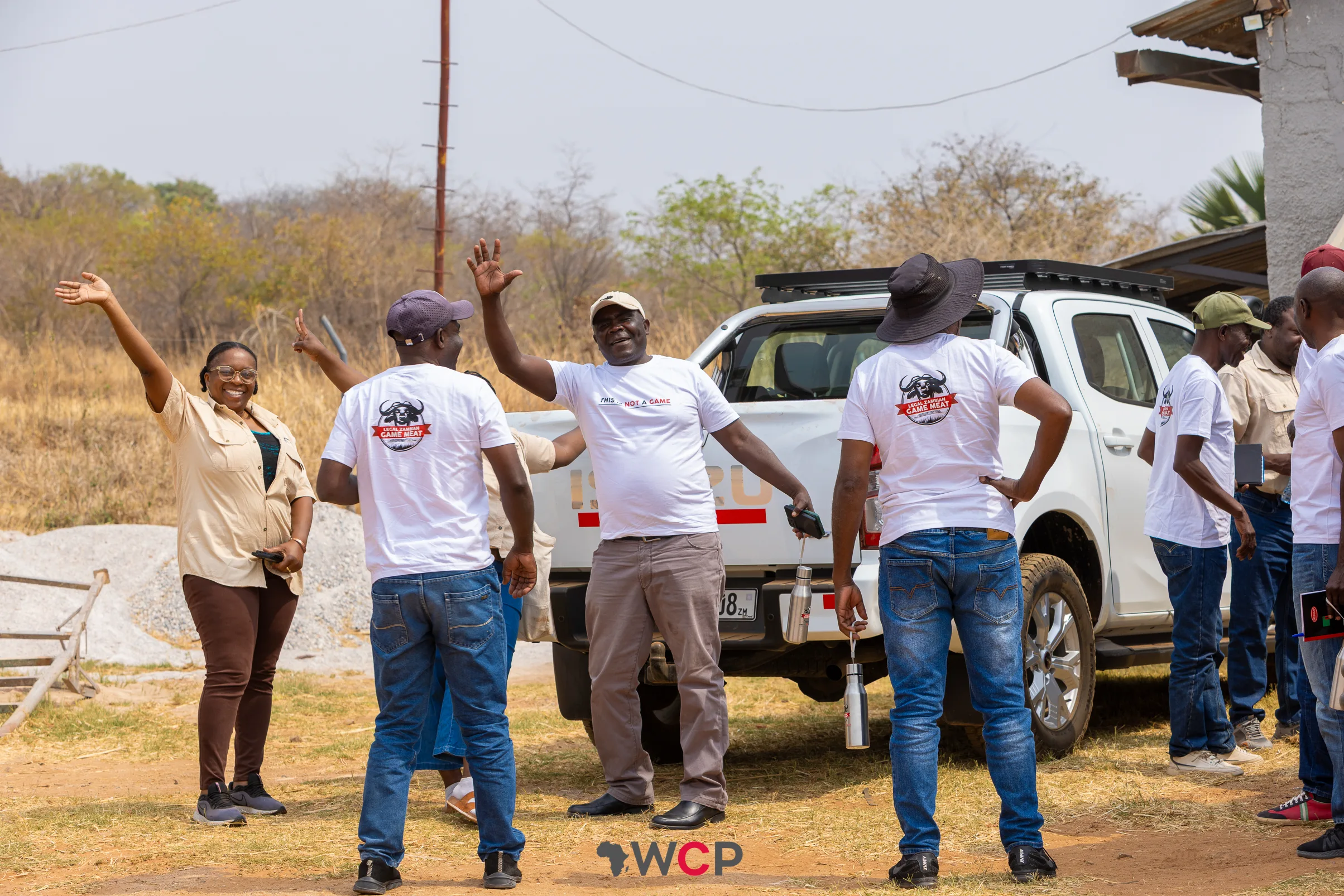
For nearly ten years, Zambia’s Bushmeat Campaign, widely recognised as the This Is Not A Game (TINAG) Campaign, led by WCP Zambia in partnership with the Department of National Parks and Wildlife, has stood at the forefront of efforts to combat illegal bushmeat trade while promoting a sustainable and legal wildlife economy. What began as a public awareness initiative has evolved into a comprehensive market-based intervention that addresses consumer behaviour, supply chain development, business formalisation, and rural livelihoods.
At its core, the campaign has demonstrated that conservation and economic development can work hand in hand. By creating viable legal alternatives to illegal wildlife consumption and trade, the TINAG Campaign has contributed to reducing pressure on wildlife populations while opening new economic opportunities for Zambians.
During this period, the TINAG Campaign has generated measurable impact across four interconnected areas: behaviour change, market system strengthening, legal market formalisation, and community livelihoods.
One of the campaign’s most significant achievements has been its success in influencing consumer attitudes and behaviours toward illegal bushmeat and creating capacity opportunities for community initiatives in game farming.
Through sustained awareness activities, targeted messaging, and the promotion of legal game meat as a safe and trusted alternative, the campaign has contributed to efforts aimed at reducing demand for illegally sourced wildlife products. Consumers increasingly understand the environmental, legal, and public health risks associated with illegal bushmeat consumption.
Today, 60% of consumers exposed to the campaign report increased awareness of the dangers of illegal bushmeat. This shift represents more than awareness alone; it reflects growing acceptance of legal game meat consumption as a responsible and sustainable choice.
The campaign also recognised that behaviour change alone would not be sufficient without a functioning legal supply chain capable of meeting consumer demand.
To address this gap, the TINAG Campaign since implementation has partnered and collaborated with the Wildlife Producers Association of Zambia (WPAZ), helping create a coordinated platform for producers, processors, and marketers within the legal wildlife economy.
Support included strengthening producer-to-market linkages, enhancing communication and public visibility, and encouraging stronger industry coordination. As a result, Zambia has an organised and operational legal game meat supply chain, with increasing participation from Zambian-owned businesses investing in legal wildlife production and trade.
This market systems approach has laid the foundation for a more resilient and competitive legal wildlife sector.
A major barrier to growth in the legal game meat sector has historically been the lack of formalisation and traceability.
The campaign addressed this challenge by supporting the development of a verified database of legal game meat outlets, helping consumers identify trusted suppliers while increasing confidence in the market.
In addition, direct business support is provided to suppliers within the industry. One notable success story is Peza Foods. Today, Peza Foods has emerged as a profitable and trusted supplier serving Lusaka and other parts of Zambia.
Such interventions demonstrate the importance of enterprise support in building a viable and sustainable legal wildlife economy.
Beyond urban markets, the campaign has invested in rural livelihoods as a critical strategy for reducing dependence on illegal hunting.
Through skills training, entrepreneurial support, and the promotion of community game farming, rural communities have been empowered with legal and structured economic alternatives linked to wildlife conservation.
Community game farming is increasingly being adopted as a viable livelihood option that generates income while supporting sustainable wildlife management. By aligning conservation incentives with local economic opportunities, the campaign has demonstrated that wildlife can serve as a valuable renewable asset for communities rather than a resource exploited through illegal hunting. This approach has helped create structured economic alternatives that support both rural livelihoods and long-term conservation goals.
Having established strong foundations over the past decade, the campaign has also observed growing demand for legal game meat, highlighting the need to strengthen supply-side competitiveness. The next phase of the campaign will therefore focus on scaling impact nationally through stronger institutional partnerships, increased consumer engagement, and improved supply chain competitiveness. These efforts aim to further reduce the illegal wildlife trade while building a thriving and sustainable wildlife economy in Zambia.
With ten years of proven impact behind it, the TINAG Campaign is now positioned not only as a conservation initiative, but also as a model for how wildlife economies can contribute to both biodiversity protection and inclusive economic growth in Zambia.
0 Comments