
By Salima Mvula
The conservation sector increasingly recognises that diverse voices are essential to shaping its future, making the development of confident and capable leaders to champion conservation just as important as protecting the landscapes and wildlife they work to safeguard.
It is through this concept that Wildlife Crime Prevention (WCP) Zambia has launched the second cohort of its Women for Conservation (W4C) Leadership Programme, bringing together 10 early-career conservation professionals for a year-long journey of mentorship, skills development and gender-aware leadership growth.
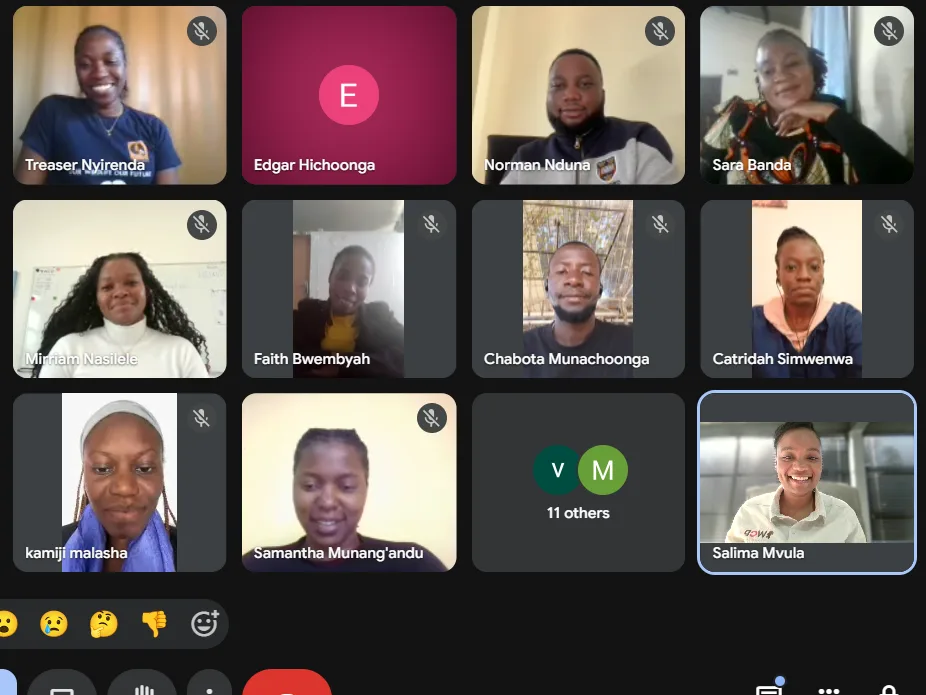
The virtual launch, held this week, marks the next chapter in an initiative that has evolved significantly since its beginnings as a mentoring opportunity for early-career conservation professionals.
The expansion of the programme is also a notable step from its inaugural cohort, which had five participants and concluded in May 2026. With the second cohort now comprising 10 participants, the programme is doubling the number of emerging conservation leaders receiving structured support as they navigate their careers.
For the new participants, the journey began with a simple but powerful question: What does leadership in conservation mean to you?
Their responses included stewardship, influence, advocacy and empowerment, to name a few. All concepts that reflect the broader vision of the programme, which is to cultivate a new generation of conservation leaders who are not only technically capable, but confident, collaborative and conscious of the gender dynamics that shape their professional environments.
Speaking during the virtual launch, WCP Communications Programme Manager, Mirriam Nasilele, reflected on how the Women for Conservation initiative has evolved over the years.
She explained that what began in 2016 as an informal network for people in the conservation sector to exchange knowledge and build professional networks has since grown to incorporate a structured leadership programme focused on long-term professional development.
“The programme has evolved from simply being a networking space into including a structured, 12-month fellowship that provides mentorship, skills development and opportunities for professional growth,” Nasilele said.
The evolution reflects WCP’s growing recognition that meaningful career development requires more than occasional networking opportunities. In 2020, the organisation introduced a more deliberate mentorship programme, which has since developed into the Leadership Programme.
The programme now combines monthly mentorship with practical skills development, Gender and Leadership Empowerment (GLE) sessions, fostering peer learning and opportunities for participants to engage with conservation professionals beyond their immediate workplaces.
Nasilele encouraged the new cohort to take ownership of their development rather than viewing the programme as something that happens to them.
“You need to be deliberate about your own growth,” she told participants, encouraging them to identify the areas where they need to develop and to actively seek support from their peers, mentors and facilitators.
She also emphasised that the programme is intended to be a community of learning rather than a one-directional relationship in which mentors simply impart knowledge to mentees.
“Everyone in this community has something to learn and something to contribute,” Nasilele noted, highlighting the value of creating a safe and supportive environment where participants can ask questions, share experiences and learn from one another.
For the ten participants, the journey ahead will provide an opportunity to strengthen practical competencies that are often critical to career progression but are not always acquired through formal academic training. The skills development sessions will cover communications, project management, monitoring and evaluation, financial management and grant writing, while mentorship will provide participants with personalised guidance aligned with their career aspirations and development needs.
Before the launch, a needs assessment was conducted to understand each participant’s professional development priorities. The results were then used to match each mentee with a mentor whose experience and expertise align with their individual career goals.
The new cohort, which is supported by the Women and Girls Fund, brings together professionals working across a broad spectrum of the conservation sector. Including individuals working in areas such as research, communications, data analysis, finance, community engagement, and wildlife management.
Their diverse professional backgrounds reflect the broad range of skills and disciplines required to address today’s conservation challenges and present an opportunity to develop strong conservation leaders at every level.
While the programme places women’s leadership and advancement at its centre, it is deliberately inclusive. 80 per cent of the participants are women, while 20 per cent are men, who participate as allies in creating more gender-aware and inclusive conservation workplaces.
This approach recognises that advancing women’s leadership cannot rest solely on women. Building understanding among men and encouraging their participation in conversations around gender can help create environments in which women are better supported to take on leadership roles.
Chabota Munachoonga, one of the men making up 20 per cent of the cohort, expressed his excitement and gratitude.
“I’m proud to have been selected for Cohort 2 of the Women for Conservation Leadership Programme by WCP Zambia. As someone passionate about conservation in Zambia, I believe leadership rooted in our communities and landscapes is key to creating lasting impact for wildlife and people,” Munachoonga said.
“I’m excited to join this network of conservation leaders, build new skills, and contribute to protecting Zambia’s ecosystems for future generations. Thank you to Women for Conservation for believing in emerging leaders. The work continues.”
During the launch, participants were also introduced to their mentors, allowing them to begin building the relationships that will form a central part of their development over the coming year. One-on-one interactions provided an opportunity for mentors and mentees to learn more about each other and establish the foundations for their mentorship journeys.
As the new cohort embarks on the programme, the focus will ultimately extend beyond individual career advancement. The broader goal is to strengthen the capacity of early-career conservationists while contributing to a stronger, more skilled and women-led conservation workforce in Zambia.
The second cohort will continue this journey through to May 2027, carrying with them the experiences of those who came before them, while helping to shape the future of conservation leadership in Zambia.
0 Comments