
By Maina Malaya
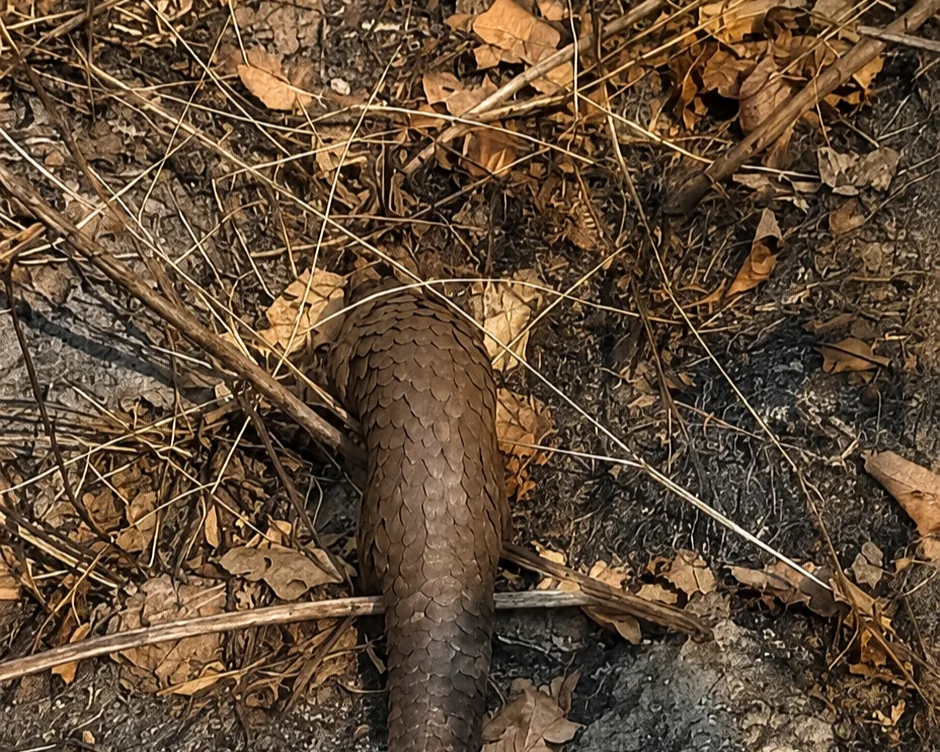
When an endangered tree pangolin wandered into Muzabula, Solwezi, on Thursday, 6 August 2026, its fate rested in the hands of the immediate crowd gathering around it. Elsewhere, fear and misinformation have ended such encounters tragically, including a reported incident in Kitwe where a pangolin was burnt. In Muzabula, however, the response was different. Community members chose protection over panic, contacting the Department of National Parks and Wildlife and keeping the animal safe until help arrived. What could have become another wildlife tragedy instead became a powerful example of how collaboration among communities, traditional healers, WCP Zambia and the Zambian Government is changing attitudes and protecting one of the world’s most trafficked mammals.
Believed to have strayed from the fenced Kansanshi area, the pangolin soon drew a curious crowd. Alerted by the commotion, members of the Traditional Health Practitioners Association of Zambia (THPAZ) working with WCP Zambia’s Protect the Pangolin campaign rushed to the scene and protected the animal. The campaign is supported by the Pangolin Crisis Fund, an initiative of the Wildlife Conservation Network and Save Pangolins.
The healers arrived and immediately contacted the Department of National Parks and Wildlife (DNPW). They had previously met the DNPW officers contacted during an engagement facilitated by WCP Zambia earlier in the year as one of the campaign activities, so they already knew whom to contact and how to respond.
While waiting for the officer to arrive, the healers used the gathering as an opportunity to speak to community members about pangolins, their protected status and the threats posed by illegal capture and trafficking. Their actions helped keep the situation calm and ensured that the pangolin remained safe until the DNPW officers arrived. It was also helpful that they wore the campaign’s branded T-shirts and caps. The animal was then recovered and, with support from WCP Zambia, safely released into suitable habitat on Friday, 7 August.
The successful rescue reflects the value of building relationships before an incident occurs. Through the Protect the Pangolin campaign, WCP Zambia and DNPW have been engaging traditional healers and communities with information about pangolin conservation, wildlife legislation and the correct procedures for reporting live animals or pangolin products.
For WCP Zambia, the Solwezi rescue shows how awareness can translate into action. “This is a positive and encouraging example of growing community awareness and changing attitudes towards wildlife as a result of collaborative ongoing work in Solwezi” said Ms. Mirriam Nasilele, WCP’s Communications Programmes Manager
The handover is reportedly the third incident in which participating traditional healers in Solwezi have assisted authorities with pangolin-related cases. The previous two incidents involved attempted sales of pangolins or pangolin parts. In each case allowing healers chose to report the matter rather than allow the products to move further into the illegal wildlife trade. This pattern is significant because traditional healers occupy an influential position in many communities. Pangolin scales and other body parts are sometimes sought for use in traditional medicine, placing healers at the centre of both the conservation challenge and its possible solutions.
The Protect the Pangolin campaign therefore engages traditional healers not as passive recipients of conservation messages, but as important partners who can reduce demand, influence attitudes and encourage community reporting.
“Pangolins are gentle, harmless animals, yet they are being hunted and killed. Some believe they are only useful for charms, but that is not true; traditionally, they help control termites and ants that destroy our crops. As traditional healers, when we come across anyone in possession of a pangolin, we report it to ZAWA, as well as to schools and clinics, to raise awareness. If we protect pangolins, they will be able to multiply, and future generations will still be able to see them,” said Dr Amos Sipuka, Northwestern Chairperson of the THPAZ.
Pangolins are among the world’s most heavily trafficked mammals. Their scales are illegally traded for purported medicinal use, while their meat is consumed in some areas. When threatened, a pangolin curls into a tight ball and relies on its overlapping scales for protection. Although this defence is effective against many natural predators, it makes the animal especially vulnerable to people, who can simply pick it up and carry it away.
Zambia is home to two pangolin species: the ground pangolin, classified as Vulnerable, and the tree pangolin, classified as Vulnerable on the International Union for Conservation of Nature Red List. Every successful rescue therefore matters. Pangolins reproduce slowly and generally do not adapt well to captivity. Each animal removed from the wild represents a serious loss to an already threatened population, while every pangolin safely returned to suitable habitat contributes to the species’ chance of survival.
The Solwezi incident also highlights the importance of community participation in wildlife protection. DNPW officers cannot be present in every forest, farm or settlement where a threatened animal may appear. The actions taken during the first few minutes after a pangolin is found can determine whether it is protected or exploited.
In Muzabula, the people closest to the incident knew whom to contact. The traditional healers helped protect the pangolin, shared conservation information with the crowd and remained at the scene until the wildlife officer arrived. DNPW responded and recovered the animal, while WCP Zambia supported its safe release.
The rescue of one pangolin will not end wildlife trafficking, but it is evidence of meaningful progress. It demonstrates what can happen when conservation education is combined with trusted community relationships, clear reporting channels and a swift government response.
Most importantly, it shows a behaviour change. For a species whose disappearance often happens quietly, that decision speaks loudly. The Solwezi rescue offers hope that continued collaboration among WCP Zambia, DNPW, traditional healers and local communities can build a stronger network of protection for Zambia’s pangolins, one informed and responsible action at a time.
0 Comments