
By Salima Mvula
Mentors, facilitators, and conservation professionals recently came together to celebrate the graduation of the inaugural cohort of the Women for Conservation Leadership Programme, marking the culmination of a year-long journey of learning, growth, and leadership development for the participating emerging conservation leaders.
The graduation ceremony provided an opportunity to reflect on the achievements of the participants and the impact of a programme designed to strengthen leadership capacity, build practical skills, and promote gender-responsive conservation. It also marked an important milestone in the evolution of the Women for Conservation (W4C) Initiative, which was launched by Wildlife Crime Prevention (WCP) Zambia in 2017 to support young women pursuing careers in conservation and natural resource management.
The Leadership Programme was developed following the success of two mentorship programme cohorts implemented in 2020 and 2022. Building on the lessons and impact of these earlier initiatives, the programme expanded beyond mentorship to provide a more comprehensive leadership development experience, combining mentorship, gender and leadership empowerment, and technical skills development.
Launched in May 2025, the year-long programme brought together five emerging conservation professionals from diverse backgrounds, including community conservation engagement and environmental science. Throughout the programme, the leaders worked closely with experienced mentors and facilitators to strengthen their leadership abilities, expand their professional networks, and develop practical skills needed to advance their careers and contribute meaningfully to the conservation sector.
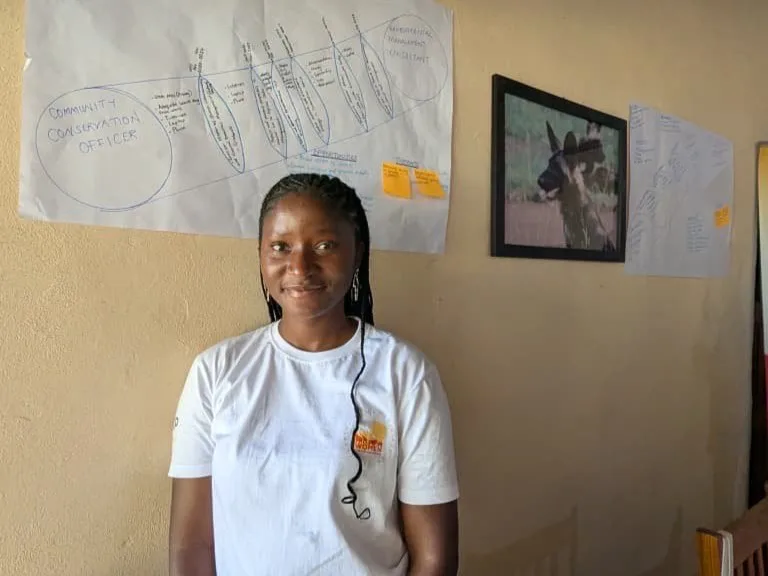
Reflecting on her experience, participant Hellen Mukuka described the programme as transformative in helping her better understand her strengths and chart her future career path.
“I would like to thank the facilitators, my mentor, and WCP for allowing me to be part of this leadership programme,” she said. “One of the things I learnt is the vision journey, which helped me recognise my strengths and weaknesses and think more intentionally about my career.”
A key component of the programme was mentorship, which paired participants with experienced conservation professionals who guided them in navigating both professional and personal challenges. Through regular engagements, participants gained valuable insights into leadership, career development, and overcoming barriers commonly experienced by women in the sector.
The programme also included gender and leadership empowerment sessions designed to help participants understand and navigate gender-related challenges in the workplace. These sessions encouraged confidence, autonomy, and intentional leadership while exploring practical ways to address systemic barriers and foster more just working environments.
For participant Mwango Mulenga, the programme strengthened her understanding of gender equity and inspired her to apply these lessons within her own work.
“In leading a team of 15 in Nabwalya Chiefdom, I actively advocated for equity for three female team members both within the organisation and within the community,” she explained. “I also created space for my male colleagues to share experiences and work collaboratively, helping to strengthen teamwork across the group.”
Mwango’s experience reflected a broader transformation observed across the cohort. According to Gender and Sustainable Development specialist and facilitator of the Gender and Leadership Empowerment sessions, Samantha Munang’andu, participants developed a much stronger appreciation of how gender dynamics influence conservation outcomes.
“They walked in disconnected and walked out owning the issue,” she said. “At first, many couldn’t see gender in their daily work. By the end, they were identifying barriers, linking them to their field sites, and recognising that social norms shape conservation outcomes just as much as science does. The shift was from ‘Why gender?’ to ‘How could we ever ignore it?’”
Complementing the mentorship and leadership components, participants also received targeted skills development training in project management, monitoring and evaluation, communications, grant writing, and financial management. Delivered by experienced professionals working within the conservation sector, these sessions provided participants with practical tools and knowledge that are essential for effective conservation leadership.
Monitoring and Evaluation specialist Norman Nduna, who facilitated the skills development session, praised the cohort’s enthusiasm and commitment to learning.
“The cohort was very curious and enthusiastic. They were active and engaged throughout the discussions, which demonstrated a genuine commitment to understanding how evidence can strengthen decision-making within the conservation sector,” he said.
Through his sessions, participants gained practical experience in developing indicators, collecting and analysing data, and using evidence to demonstrate conservation outcomes and programme impact.
Over the past year, the inaugural Women for Conservation Leadership Programme cohort has strengthened its leadership capacity, developed new technical skills, and deepened its understanding of gender-responsive conservation practice. More importantly, participants have built networks, confidence, and a sense of purpose that will continue to support them throughout their careers.
As the programme celebrates this milestone, it also highlights the critical role women play in shaping the future of conservation and natural resource management. Diverse perspectives and balanced leadership are essential to addressing the environmental and social challenges facing communities today.
By investing in the confidence, skills, and leadership potential of emerging women conservation professionals, the Women for Conservation Initiative is helping to build a stronger and more participatory conservation sector in Zambia.
For the graduates, this ceremony marks not the end of their journey but the beginning of a new chapter, in which they will continue to lead, inspire, and drive positive change for people, wildlife, and the environment.
0 Comments