
By Maina Malaya
“The government’s last born.” “If you see it in your yard, just shift!” “What makes it so special?”
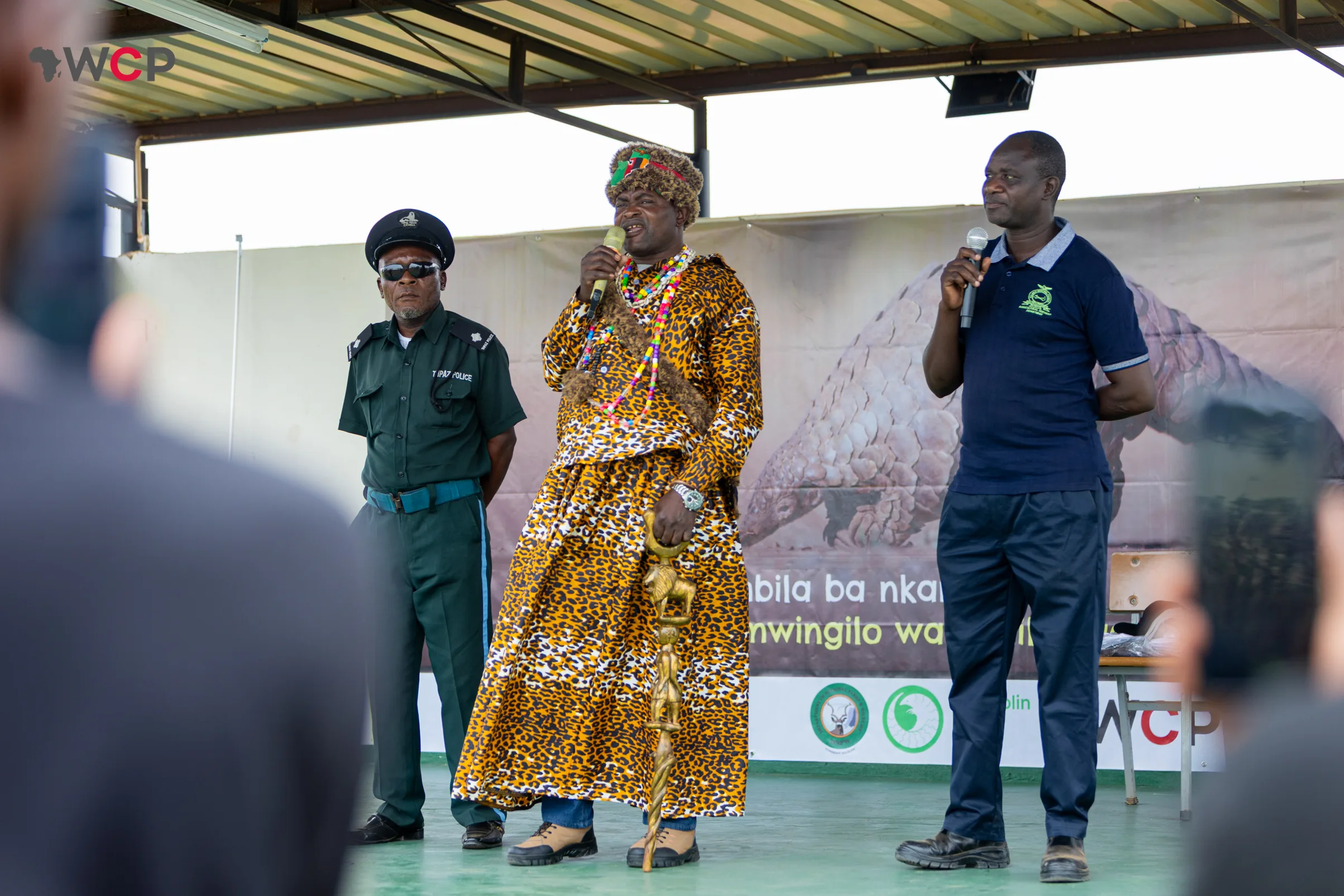
These are some of the curious remarks and questions often heard in conversations or seen beneath social media posts about pangolins in Zambia. Such questions, myths, fears, and seizure trends inspired a ground-breaking response. The launch of Zambia’s first-ever Pangolin Campaign in Solwezi which also marked a powerful example of co-creation in action. A coming together of science, culture, and community.
Led by WCP Zambia in partnership with the Department of National Parks and Wildlife (DNPW), the initiative was not designed in isolation. Instead, it was built from the ground up, shaped through dialogue with traditional leaders, healers, and local communities to ensure that every step is rooted in cultural understanding and shared responsibility.
The campaign stems from a national study conducted by WCP Zambia, Copperbelt University, and WILDCRU (University of Oxford), which identified belief-based use as a key driver of the illegal pangolin trade. The study also highlighted Solwezi as a key area for intervention due to the prevalence of pangolin activities. Recognising that community trust plays a crucial role in shaping beliefs and behaviour, WCP and DNPW placed people at the heart of the solution. By engaging traditional structures, including healers and community leaders, the team worked collaboratively to co-design messages and select communication channels that resonate with local values, traditions, and lived experiences.
This collaborative approach was highly commended by WCP partners and stakeholders at the launch on 1 November 2025 in Solwezi. Speaking through the District Administrative Officer at the event, the Solwezi District Commissioner, Mr Tredson Mulofwa, applauded the initiative’s inclusive approach and emphasised the importance of collective responsibility.
“I want to commend WCP Zambia and DNPW for their inclusive, holistic approach, one that brings everyone to the table, from policymakers to community members. I call upon all residents of Solwezi to take ownership of this campaign. Let us speak out against illegal trade, report suspicious activities, and protect our pangolins not only for ourselves, but for future generations.”
His remarks captured the effort of co-creation that underpins the campaign, a shared recognition that protecting wildlife is not the duty of one institution alone, but a collective effort that spans from government to grassroots.
In the same spirit, representing DNPW, the Solwezi Area Warden, Mr Rodick Kapokola, reaffirmed the department’s dedication to protecting Zambia’s wildlife, while stressing the need for citizen involvement.
“As DNPW, we reaffirm our commitment to continue protecting Zambia’s pangolins and all our wildlife. But we cannot do it alone. We call upon every citizen, traditional leader, and youth to be an ambassador for conservation. Report illegal activities. Share accurate information. And take pride in protecting a species that is both rare and uniquely ours.”
The inclusion of traditional voices has been central to the campaign’s development. Through community plays, radio programmes, and public discussions, traditional leaders and healers will be helping to challenge harmful myths, share correct information, and promote pangolin conservation through storytelling and cultural wisdom.
The engagement of traditional healers, often seen as unlikely stakeholders, has been one of the standout aspects of the co-design process. Representing the Traditional Health Practitioners Association of Zambia (THPAZ), Dr. Amos Shipuka highlighted the vital role that traditional healers can play as champions of wildlife conservation in Zambia. He described this initiative as the first of many spaces where traditional healers should have a seat at the table to help dispel harmful myths linked to traditional healing practices.
“This animal harms no one, yet so many beliefs and misconceptions continue to threaten its existence,” Dr. Shipuka said. “I am glad to be here today because through this co-creation process, I have learned more about the pangolin. I encourage my fellow doctors to step forward whenever such a noble cause presents itself, and I know that this is the first of many.”
The campaign comprises a play called “Mwinemushi ne Nkaka”, ‘The Village Leader and the Pangolin’, that will be performed across the district in intervals. Every performance will be followed by a few words from local traditional leaders. For the launch hosted in Solwezi Central Business District, speaking on behalf of the Kapijimpanga Royal Establishment, Group Leader Sendwe Benson emphasised the importance of respecting pangolins and protecting them within their natural environment.
“Pangolins must be left alone. If you see one under suspicious circumstances, report it immediately to DNPW or the nearest government office. Removing a pangolin from its natural environment is illegal and can result in up to five years in prison. The illegal pangolin trade harms families and communities, and it undermines cultural values.”
His statement served as a powerful reminder that protecting pangolins is not only an environmental concern but also a moral and cultural responsibility.
The Solwezi launch marks the beginning of a nationwide movement built on partnership, participation, and pride. By merging conservation science with community-driven solutions, WCP and its partners are setting a new standard for wildlife protection in Zambia, one where every story, belief, and tradition has a role to play in shaping a sustainable future for both people and pangolins.
0 Comments