
The road from Solwezi to Kasama is beginning to represent something more than distance for WCP Zambia. It is becoming a measure of how far an idea can travel, and how deeply it can take root when it finds the right people to carry it.
That idea was born out of work with communities in Solwezi: that the most powerful voices for pangolin protection in Zambia may not be conservationists, but traditional healers and leaders.
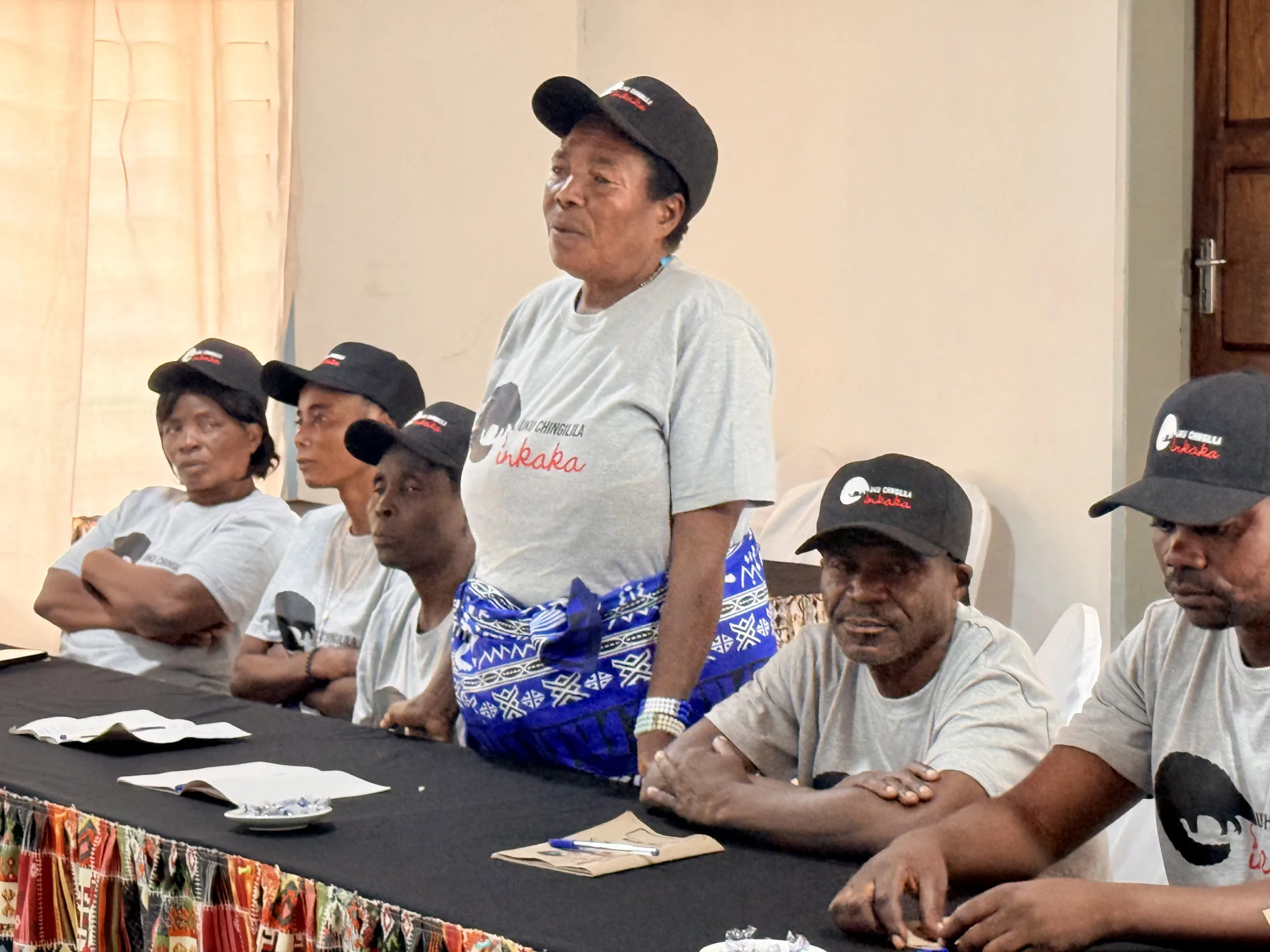
In Kasama, at Ludo Lodge, traditional healers and community leaders gathered for two days of open and honest conversations with conservationists. The discussions were facilitated by WCP’s Operations Coordinator, Remmy Kopeka, and Communications Officer, Maina Malaya, alongside Bwalya Kampamba-Mafuleti, the Rising Wildlife Leaders Manager at the Wildlife Conservation Network.
This was the second time WCP Zambia had convened such a meeting. The first, in 2025, began reshaping how traditional healers and leaders viewed pangolins. This time, with support from the Wildlife Conservation Network (WCN) through its Rising Wildlife Leaders (RWL) Career Programme, of which Remmy is a fellow, he and Maina, who led an illegal pangolin trade study, carried the work northward. Testing whether what had taken root in Solwezi could grow in Kasama.
By now, many people have heard that pangolins are heavily trafficked. In fact, pangolins are one of the most trafficked mammals in the world, with an estimated 1 million individuals taken from the wild over the past decade. But what remained less understood for a long time was why they are sought after.
In Zambia, the trade is not only opportunistic, but it is also shaped by deeply embedded cultural beliefs. Many communities’ associate pangolins with many long-held cultural beliefs. This was informed by WCP Zambia’s study to understand the illegal pangolin trade, making it impossible to ignore. It pointed toward an approach that felt counterintuitive, rather than working around traditional healers and chiefs, bringing them in, let them be the architects of the solution.
This matters because wildlife trafficking is now one of the largest illegal trades globally and local demand plays a critical role in sustaining it.
The day before the workshop, the team was already on the ground. They visited the Traditional Healers and Practitioners Association of Zambia in Kasama, as well as representatives of the House of Chiefs. Each visit followed cultural protocol, an important signal that this was not an outsider arriving to dictate change, but a partnership built on respect.
By the time the workshop opened, the room held traditional healers and headmen who, in another context, might have been seen as part of the problem. Here, they were something else entirely, potential leaders of change.
“What stood out most was the genuine curiosity from traditional healers and leaders. Many were eager to understand pangolins beyond their existing knowledge, even though very few had ever seen one in the wild.” Bwalya Commented.
Day one explored difficult grounds: the illegal wildlife trade, the global pangolin market, and the role of local demand in an international crisis. The facilitator’s tasks were not just to inform, but to hold the space without letting the conversation slip into blame.
“I didn’t know what to expect,” Remmy said. “But I hoped at least they would give us an audience, and they gave us more than that. They shared stories of their encounters with pangolins, including one where someone accidentally sat on one,” he added with a laugh.
By day two, the conversation had shifted from problem to possibility. How could traditional healers and leaders become active voices for pangolin protection within their communities? It was time for the facilitators to listen. The discussion was energetic. These were individuals with influence rooted in trust. They did not need convincing that their communities mattered; they needed to see that their authority could help protect.
“You have been invited to this workshop because you are the leaders of this land in the spaces that matter most to communities, health and tradition” Maina emphasised during the workshop
WCP remains realistic about the scale of the challenge. The illegal pangolin trade is vast, deeply entangled with both poverty and tradition, and a two-day workshop in Kasama does not dismantle it. But it is building something, a network of people in positions of community authority who now see the pangolin differently, who have sat across a table from a conservationist and found they share more than they expected.
What WCP began in Solwezi is slowly becoming something larger. In a lodge in Kasama, over two days in March, that future felt, if not certain, at least possible.
0 Comments