
By Mirriam Nasilele
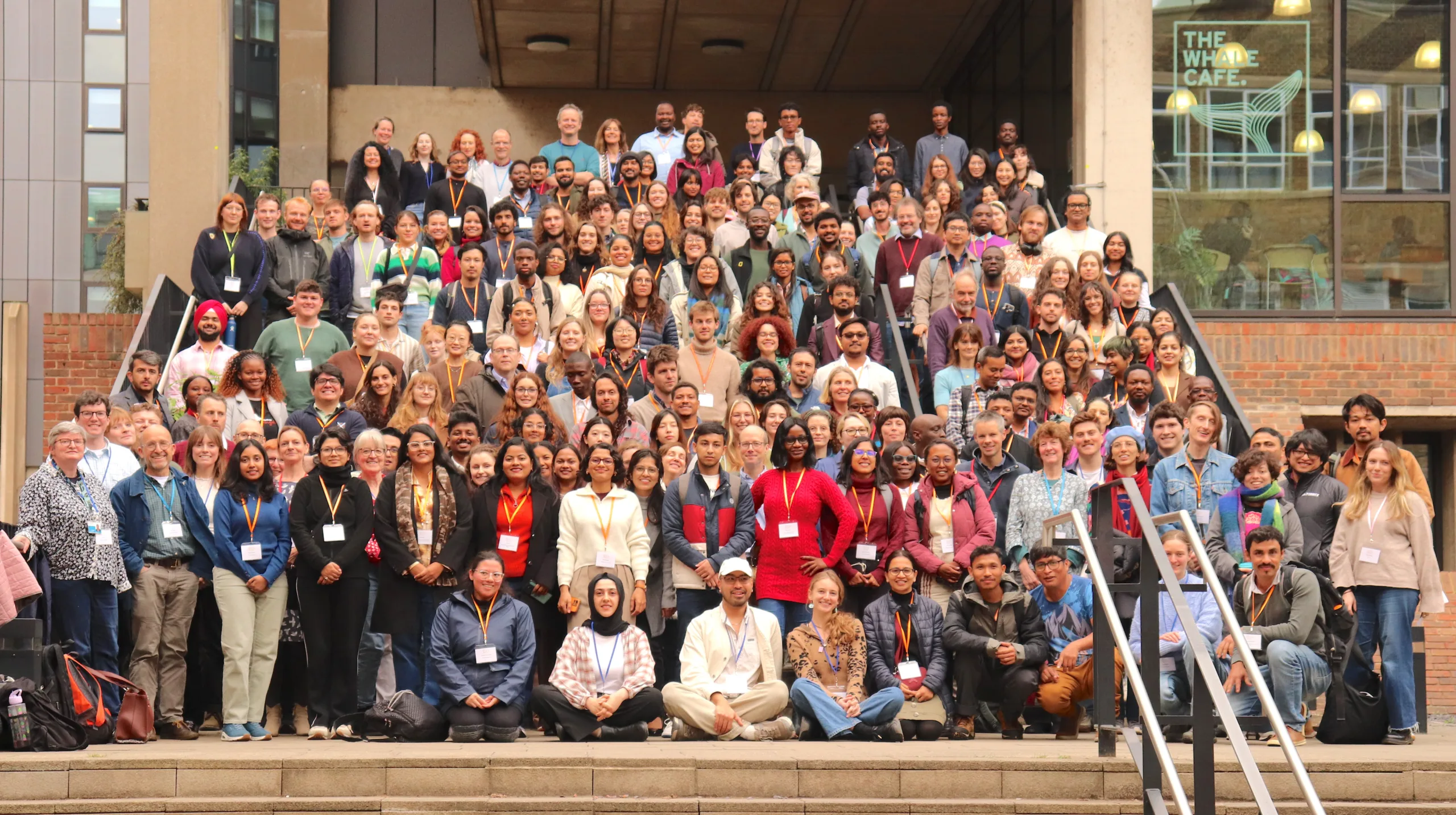
Over three crisp spring days in Cambridge, I joined voices from across the globe, all gathered with a shared urgency: the future of our planet cannot be saved by science alone.
For decades, conservation was largely about counting species, mapping habitats, and documenting decline. But throughout my experience at the 25th Student Conference on Conservation Science (SCCS) 2026, it became clear that a new generation is reshaping that narrative.
“Only through combining understanding of both the natural world and human behaviour can we tackle the greatest challenges facing biodiversity,” said Dr Rosie Travelyan, Director of the Tropical Biology Association, University of Cambridge.
This philosophy underpinned the conference, held from 31 March to 2 April 2026 at the University of Cambridge a gathering that not only marked 25 years of SCCS, but also reflected how far conservation itself has evolved.
As I engaged with students, researchers, and organisers, one theme consistently emerged: conservation is no longer just about observing nature, it is about influencing people.
“Over the past 25 years, we’ve seen a major shift,” said Andrew Balmford, Professor of Conservation Science, University of Cambridge. “Students are no longer just collecting ecological data, they’re connecting it to human behaviour and decision-making.”
This evolution was evident across presentations. Where conservationists once focused on monitoring species and habitats, they are now working at the intersection of ecology, technology, and society. Tools like machine learning and environmental DNA are being combined with community knowledge to design more effective interventions.
“We’re seeing students bridge ecology with social strategy in ways we couldn’t imagine two decades ago,” Professor Andrew added.
Throughout the conference, I found one message echoing across sessions: saving nature means changing human behaviour. This shift is particularly critical in addressing illegal wildlife trade (IWT), one of the most complex and persistent conservation challenges. What stood out to me was the move from problem identification to solution-driven thinking.
Students showcased innovative approaches, from training giant pouched rats to detect trafficked wildlife, to investigating online raptor trafficking networks in Pakistan, and designing behavioural interventions in travel spaces.
“The focus is increasingly on solutions, how we intervene, not just what we observe,” said Professor Andrew.
As part of the conference, I had the opportunity to present Wildlife Crime Prevention (WCP) Zambia’s “Worth More Alive” campaign, an initiative that reflects this growing emphasis on behaviour change. The campaign targets wildlife trafficking at Zambia’s four international airports, focusing not only on enforcement, but on awareness, behaviour, and reporting mechanisms.
In sharing this work, I was reminded that conservation success often begins with people, their knowledge, their attitudes, and their willingness to act.
“What we’re seeing is that behaviour change can be just as powerful as enforcement,” I noted during my engagement. “When people understand the value of wildlife and feel empowered to act, they become part of the solution.”
The campaign’s results demonstrate this impact: 330% increase in pangolin awareness, marked by a fourth sculpture installation launched in April 2026. Over 200 frontline staff trained across four international airports. 130 campaign posters placed in high-traffic areas. Establishment of a 24/7 wildlife crime reporting hotline. Presenting these outcomes on a global stage reinforced the importance of integrating behavioural approaches into conservation strategies, an approach that is both scalable and impactful.
Beyond illegal wildlife trade, the conference explored a broader and equally pressing question: how humans and wildlife can coexist in shared landscapes.
Many of the most compelling presentations focused on reducing conflict while supporting sustainable livelihoods for communities living alongside wildlife. “Some of the most impactful work now is about coexistence,” said Dr Rosie. “It’s about finding solutions that benefit both people and nature.”
At the same time, there was a strong emphasis on climate change adaptation and mitigation, with research aimed at preparing conservationists for rapidly changing environmental conditions.
One of the most striking aspects of SCCS is its commitment to putting students at the centre. “This conference has always been about giving students a voice,” said Professor Andrew. “It’s where they build confidence, not just as scientists, but as advocates.”
Over the past 25 years, SCCS has brought together more than 4,000 delegates from 144 countries, creating a truly global network of conservation practitioners. Recognising barriers to participation, the conference has supported nearly 400 delegates through bursaries and grants, particularly those from underrepresented regions, the Global South.
Being part of this diverse community highlighted for me the power of shared learning and collaboration across borders.
As the conference ended, I was left with a clear impression: SCCS is more than an event, it is a movement. A movement built on collaboration, curiosity, and a shared commitment to solving some of the world’s most complex challenges.
“The real legacy of SCCS is the relationships it builds,” said Dr Rosie. “These connections shape the future of conservation across the world.” For me, SCCS 2026 was not just an opportunity to share Zambia’s work, it was a reminder that the future of conservation lies in our ability to connect science with people, and knowledge with action.
And if the voices I heard in Cambridge are anything to go by, that future is already taking shape.
0 Comments