
By Natasha Kabanda
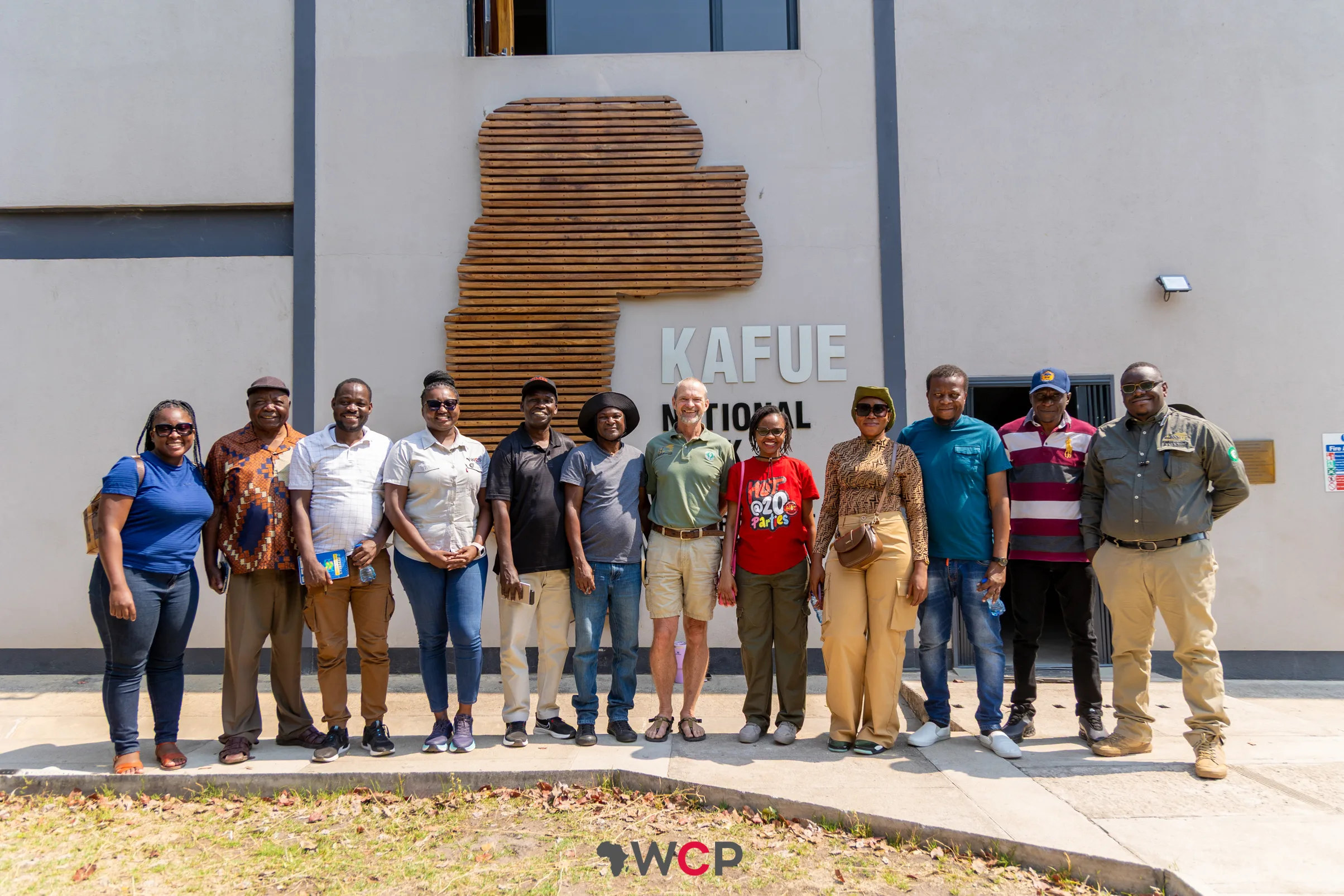
In an effort to strengthen the link between media and conservation, ten managing editors from leading Zambian media houses embarked on a journey unlike any newsroom assignment they had experienced. Their mission was not to report, but to reflect, to share insights, provide feedback, and help shape the future of one of Zambia’s most transformative media initiatives: the Environmental Crimes Journalism Fellowship (ECJ).
Implemented by WCP Zambia, the fellowship empowers journalists to report more effectively on environmental and wildlife issues, building their capacity to tell stories that inform, inspire, and drive action. The Managing Editors Media Visit to Kafue National Park was designed to assess the impact of the fellowship on participating journalists and to explore how collaboration with media institutions can be strengthened to sustain momentum in conservation storytelling.
The initiative also aimed to deepen the editors’ understanding of the vital role the media plays in shaping public attitudes towards environmental conservation and wildlife protection. The media, through accurate and well-balanced reporting, helps the public understand the challenges facing Zambia’s wildlife and the extensive efforts being undertaken to protect it.
One of the highlights of the visit was the team’s stop at African Parks’ Chunga Headquarters, where the editors interacted with park management and staff. African Parks, a non-profit conservation organisation manages protected areas across Africa in partnership with governments and local communities. Known for their results-driven approach, they focus on restoring ecosystems, protecting wildlife, and supporting sustainable livelihoods for surrounding communities. In Zambia, African Parks entered into a 20-year management agreement with the Government of the Republic of Zambia through the Department of National Parks and Wildlife (DNPW) to manage Kafue National Park. This long-term partnership aims to revitalize the park by improving law enforcement, infrastructure, tourism potential, and community engagement, ensuring that Kafue becomes a model of sustainable conservation and a cornerstone of Zambia’s natural heritage.
The team was welcomed by Park Manager Craig Reid, who provided a comprehensive briefing on Kafue National Park’s history, its progress under African Parks’ management, and an ambitious five-year plan aimed at restoring the park’s ecological integrity. Craig Reid emphasised that the media plays an indispensable role in conservation efforts. “You, the media, are an important stakeholder in this sector,” he said during his presentation. “You have the power to influence how the public perceives conservation and to ensure that the right information reaches people across the country. Through your coverage, you can help generate national pride and awareness about the importance of protecting our wildlife.”
One of the most exciting prospects shared during the visit was African Parks’ plan to reintroduce Black Rhinos to Kafue National Park, a milestone that would make it the second park in Zambia to host the Big Five. The initiative represents a bold step towards ecological restoration and species recovery, signaling Kafue’s growing potential as one of Africa’s premier conservation success stories.
The editors also learned about African Parks’ community engagement efforts, anti-poaching initiatives, and partnerships with government and civil society. Seeing these operations firsthand gave them valuable insights into the complexity of wildlife management and the dedication required to sustain Zambia’s natural ecosystems.
Initiatives such as the Environmental Crimes Journalism Fellowship are vital in strengthening the link between conservation and the media. They equip journalists with the knowledge, skills, and firsthand exposure needed to accurately report on complex environmental issues. In an era where misinformation can easily spread, it is crucial for the media to have access to credible and factual information to ensure their stories are balanced, insightful, and impactful. By empowering journalists to understand conservation dynamics and the broader environmental context, such programs help shape informed public dialogue, influence policy decisions, and inspire collective action to protect Zambia’s natural resources.
The Managing Editors Media Visit to Kafue National Park reaffirmed the importance of collaboration between media and conservation organisations. It demonstrated that editors, just like reporters, have a pivotal role in shaping Zambia’s environmental narrative. When media professionals and conservationists work together, the result is stronger public engagement, better policy dialogue, and more informed citizens.
As the editors departed from Kafue, their reflections carried a sense of renewed purpose. The park’s vast wilderness had offered more than breathtaking scenery, it had sparked a deeper understanding of the responsibility they hold as gatekeepers of national conversation.
The visit ended with appreciation for the organisations that make such collaborations possible. WCP Zambia is grateful to it’s donors, the U.S. Embassy Zambia and Sida – Styrelsen för Internationellt Utvecklingssamarbete, for their support in making this initiative possible.
In the end, the message is clear: conservation is not just about protecting wildlife, it’s about protecting stories that inspire a nation to care.
0 Comments