
By Beatrice Chabaya
For generations, the Kafue Flats landscape has remained one of Zambia’s most treasured ecosystems, supporting wildlife, communities and livelihoods.
Stretching across wetlands, grasslands and protected areas, the landscape has long been known for its rich biodiversity, its role in agriculture and fishing, and its importance to tourism and conservation.
Across Zambia, national parks and Game Management Areas have continued to play a similar role, providing habitats for wildlife while contributing to economic development through tourism and natural resources. But over the years, these protected areas have increasingly come under pressure from human activities such as encroachment, illegal settlements, habitat degradation, and uneven tourism development.
For many years, the Department of National Parks and Wildlife (DNPW), working with the Government and conservation partners, had been seeking long-term solutions that would provide clear direction for managing these important areas while ensuring communities also benefited.
The journey, however, was not a simple one because it required years of planning, consultations, and repeated discussions among different stakeholders.
Documents were drafted and reviewed, concerns were raised and addressed, and strategies were refined over time.
And for more than 20 years, the government and cooperating partners continued engaging with traditional leaders, conservation organisations, communities, and technical experts to develop management plans that would reflect the needs and realities on the ground.
The result of that long process would eventually become what are known as General Management Plans (GMPs).
These plans are considered the highest-level planning tools for protected areas under the Zambia Wildlife Act No.14 of 2015. They provide guidance on conservation, tourism development, resource management, and community participation.
But before reaching the launch stage, another important process had to take place.
In November 2025, stakeholders gathered in Monze District for a validation workshop on the Kafue Flats ecosystem. The purpose of the meeting was to review and refine proposed management strategies for the landscape.
Different stakeholders examined the contents of the documents and made recommendations on areas that needed adjustment. The workshop also provided a platform for traditional leaders, conservation experts, and Government representatives to provide input and ensure the plans reflected local realities.
Months later, another important meeting followed.
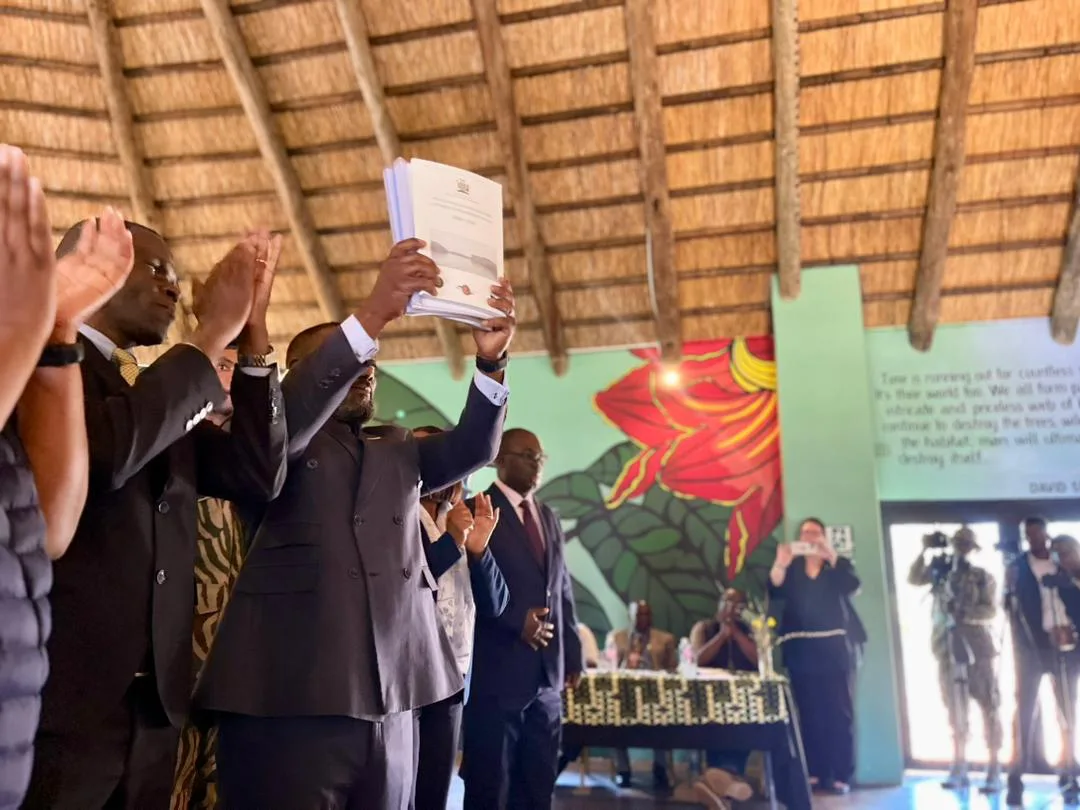
Traditional leaders, Government officials and conservation stakeholders gathered in Mumbwa District for the signing ceremony of the General Management Plan for the Kafue Flats ecosystem.
The plan covered important, protected areas including Lochinvar National Park, Blue Lagoon National Park, and the Kafue Flats Game Management Area.
The plan outlined strategies aimed at improving conservation efforts, strengthening law enforcement, promoting sustainable tourism, and enhancing community participation in natural resource management.
Speaking during the ceremony, Mumbwa District Commissioner Ms. Namukulo Munalula described the moment as more than a routine signing exercise.
She said it represented a shared commitment towards protecting one of Zambia’s most important ecosystems.
“Protecting the Kafue Flats landscape will enable future generations to continue benefiting from the social, economic, and cultural value that nature offers,” Ms Munalula said.
She further noted that the Kafue Flats are not only home to wildlife but also support communities through grazing land, fishing, agriculture, and water supply.
Following the consultations, reviews, and stakeholder engagements, the documents were later submitted to the Ministry of Tourism for final approval and launch.
On May 15, 2026, Government officially launched seven General Management Plans aimed at strengthening wildlife conservation, sustainable tourism, and community participation across the country.
The seven plans launched included Lusaka National Park, Mosi-oa-Tunya National Park, West Lunga National Park, the Kafue Flats Landscape, Mulobezi Game Management Area, Sichifulo Game Management Area, and the Addendum to the Lunga Luswishi Game Management Area.
Speaking during the launch, Minister of Tourism Honourable Rodney Sikumba said the plans represented a major milestone in balancing conservation with economic development.
He explained that the plans had become necessary because protected areas were increasingly facing pressures such as encroachment, illegal settlements, and uneven tourism growth.
“The GMPs will act as guidelines to show us what is supposed to be done and where,” Mr. Sikumba said.
The Minister also highlighted achievements made in recent years, including collaborative management partnerships, tourism concessions, recruitment of wildlife police officers and wildlife translocations.
Acting Permanent Secretary, Ms. Vivien Ndhlovu, said the plans were a result of strong partnerships between Government and cooperating partners.
She explained that the documents would provide a framework for conservation, investment guidance, tourism development, and community participation.
Meanwhile, DNPW Acting Director Mr. Jones Masonde noted that the development of the plans represented over two decades of collaboration among stakeholders.
World Wide Fund for Nature representative Ms. Agnes Chinyama also observed that Zambia remains among countries with significant protected land areas and said effective implementation of the plans could unlock broader economic opportunities.
Speaking on behalf of fellow traditional leaders, Chief Nalubamba King emphasized the connection between culture and conservation.
“This is a very good initiative, and this is what we as traditional leaders should emulate too. We should also have proper structures in our chiefdoms, just like the GMPs, so that we operate smoothly,” he said.
Beyond the meetings, signatures, and official ceremonies, the real value of the General Management Plans lies in what they are expected to achieve.
The plans are expected to strengthen wildlife conservation efforts, improve protection of ecosystems, guide tourism investment, and create opportunities for communities living around protected areas.
They also provide clear guidance on law enforcement, land use, infrastructure development, and natural resource management.
For wildlife, they represent an opportunity for better protection of habitats.
And for Zambia’s Tourism sector, they provide a roadmap for sustainable growth.
0 Comments