
By Natasha Kabanda
The Women’s Land and Resource Rights (WLR2) Platform intentionally created a space for women to speak, reflect, and lead. One room was filled with different languages and shared experiences from the field and offices. Some women spoke English, while others shared in their local languages, with translators helping everyone understand.
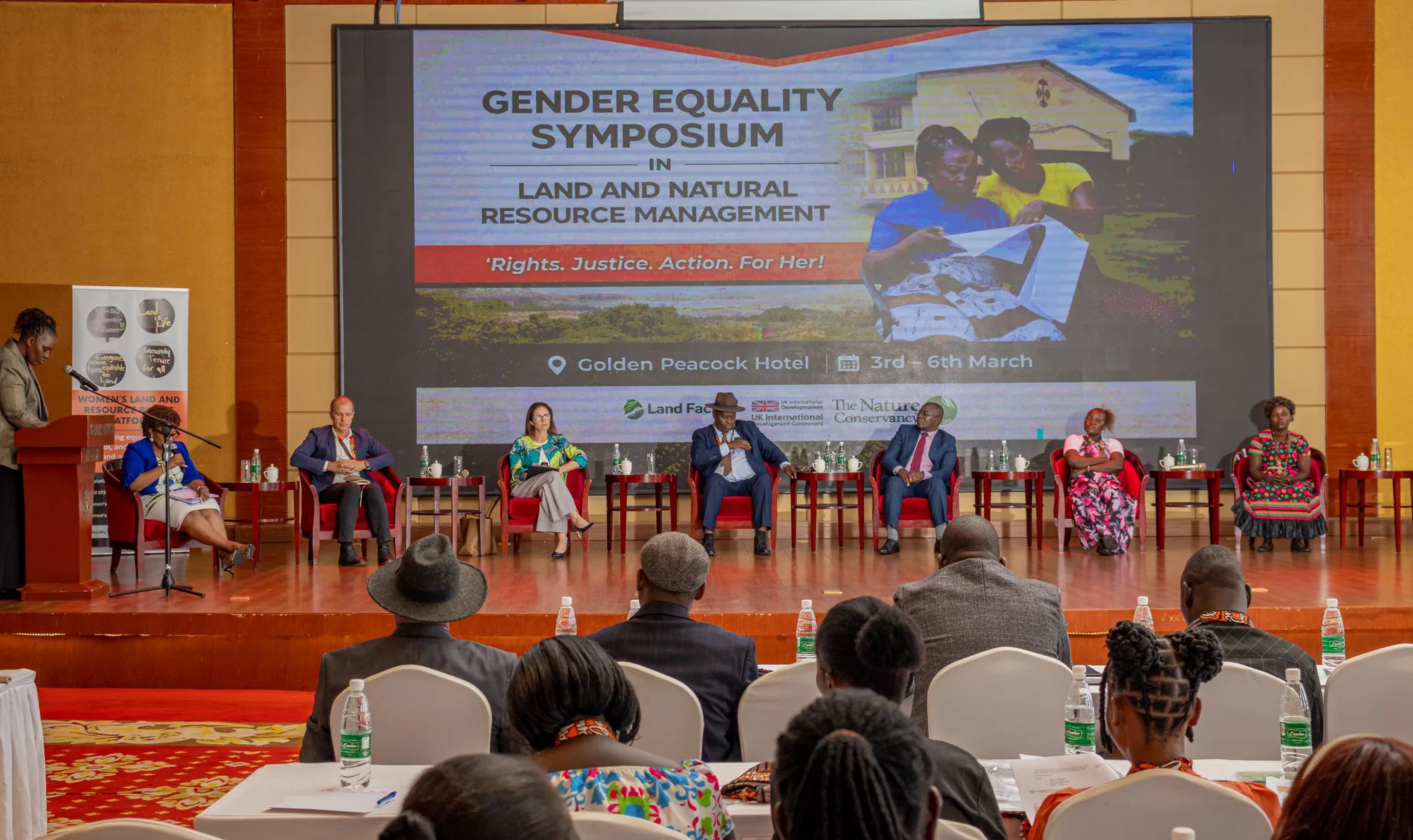
From March 3rd to 6th, more than 250 women working in Natural Resource Management (NRM) gathered in Lusaka for the Gender Equality Symposium in Land and Natural Resource Management, under the theme “Rights. Justice. Action. For Her!”.
Among the participants was WCP’s Gender Champion, Maina Malaya, who is also a member of the WLR2 Platform and WCP’s Legal Officer, Chliufya Chongo. Both, like all invited gender champions, played an active role during the symposium, moderating sessions and participating in panel discussions.
The symposium, organised by the Women’s Land and Resource Rights Platform with support from the UK FCDO-funded Land Facility and The Nature Conservancy, brought together women community leaders, traditional leaders, civil society actors, practitioners, and development partners working in the land and natural resource sectors.
The Gender Equality Symposium sought to challenge this reality of underrepresentation and ineffectiveness of women in NRM by creating a platform where women themselves could take centre stage.
Over the three-day symposium, participants shared their lived experiences and explored solutions to strengthen women’s participation and leadership in land and natural resource governance.
“We are the ones who fetch water, till the land and plant the crops, we are the users, so we must be decision makers and leaders and that’s why I am proud,” Juliet Nyirenda from Chikwa Community Forestry Management Group stated with pride
These conversations were enriched by the participation of 11 traditional leaders and representatives from more than 30 institutions and organisations, creating a multi-stakeholder dialogue that underscored the importance of collaboration in transforming governance systems.
The symposium was intentionally designed to be inclusive. Recognising that language can be a barrier to participation, the organisers provided translators so participants could speak in their own languages, ensuring that women from different regions could freely share their experiences and ideas.
Equally important was the presence of a crèche at the venue, where trained caregivers looked after babies and young children. This allowed mothers to engage fully in the discussions without worrying about childcare, a practical but often overlooked barrier to women’s participation in leadership spaces.
These measures ensured that every participant, regardless of background or circumstance, could contribute meaningfully to the dialogue.
The discussions were organised around key themes reflecting the realities and challenges faced by women in the sector. The first day focused on lived realities and evidence from the field, where community leaders shared firsthand experiences of navigating barriers to land rights and participation. The second day explored the cost of exclusion and models for transformative approaches, highlighting the economic, environmental, and social consequences of excluding women from natural resource governance. By the third day, attention shifted to building partnerships and alliances to accelerate action, recognising that lasting change requires collaboration between communities, civil society, traditional leaders, and policymakers.
One of the major highlights of the symposium was the launch of the 50–50 Call Campaign, an initiative aimed at promoting equal participation, representation, and access to benefits for women in land and natural resource governance.
The campaign calls on communities, institutions, and policymakers to work collectively to dismantle structural barriers and challenge harmful gender norms that limit women’s leadership. The initiative is expected to mobilise partners across Zambia to support women’s land and resource rights while amplifying the voices of women, youth, and marginalised groups.
The symposium concluded on 6th March with a skills-building training for community women leaders, focusing on leadership, advocacy, and strengthening women’s ability to influence decisions in natural resource governance.
For many participants, the training represented more than just learning new skills; it was an opportunity to connect with other women leaders facing similar challenges across the country.
As the conversations ended and participants returned to their communities, one message echoed throughout: Women are not just beneficiaries of natural resources; they are leaders, custodians, and decision-makers.
Through initiatives like the Gender Equality Symposium and the 50–50 Call Campaign, Zambia is taking important steps toward ensuring that women’s voices shape the future of land and natural resource governance.
And for the women who gathered in Lusaka, the work does not end with the symposium.
It begins there.
0 Comments