
By Maina Malaya
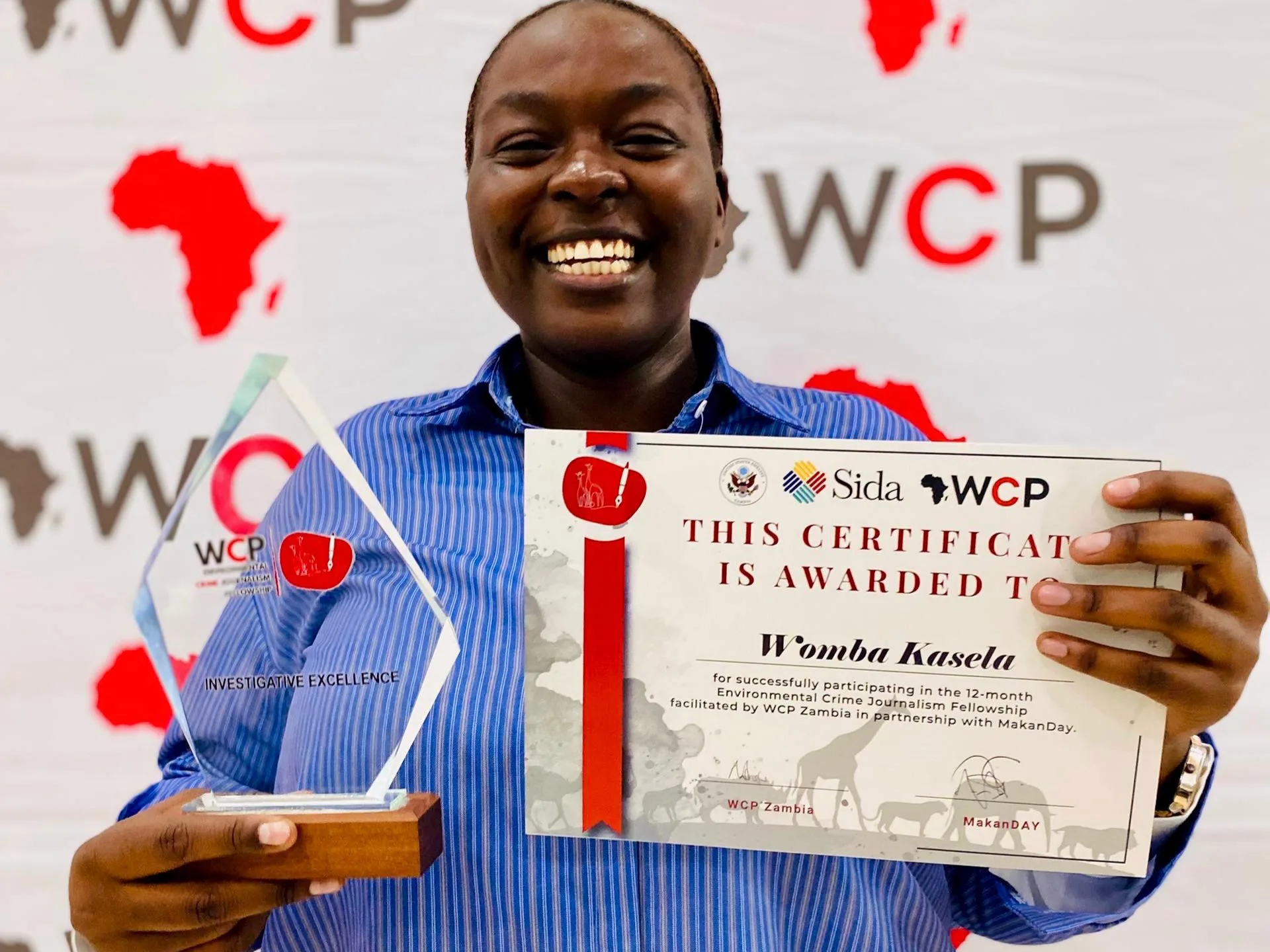
As the second cohort of the Environmental Crime Journalism (ECJ) Fellowship reached its conclusion, the journey came full circle in a moment marked by reflection, pride, and renewed purpose. On 26 February, fellows, partners, and stakeholders gathered to celebrate not just the end of a programme, but the beginning of a sustained commitment to environmental accountability through journalism.
The graduation ceremony was more than a formal send off. It was a recognition of transformation, of journalists who had sharpened their investigative instincts, deepened their understanding of environmental crimes, and found the courage to pursue stories that matter.
In his opening remarks, Maxton Arcand, Deputy Public Affairs Officer from the U.S. Embassy, emphasised the significance of the fellows’ work and the responsibility they carry forward.
“To the journalists: you represent the best of your profession. Through the U.S. Embassy’s partnership with Wildlife Crime Prevention, you’ve deepened your expertise on some of the most critical challenges facing Zambia, illegal timber extraction, wildlife trafficking, and unsustainable mining practices. But more importantly, you’ve committed yourselves to telling these stories with accuracy, balance, and courage.”
He emphasised that independent media plays a vital role in society, not only by informing the public but by strengthening democratic institutions. “When journalists investigate illegal timber trafficking or expose wildlife crimes, they’re not just reporting news, they’re defending the public interest,” he noted. “Facts alone do not move people, stories do.”
Arcand’s remarks captured the essence of the fellowship’s mission: that storytelling, when grounded in truth and driven by purpose, has the power to shape national discourse and inspire action.
Echoing this sentiment, Charles Mafa, Co-founder of MakanDay Centre for Investigative Journalism and Mentor for the ECJ fellowship, reflected on the importance of investing in investigative journalism and building a community of reporters equipped to tackle complex environmental issues. He highlighted how programmes like ECJ are critical in strengthening the media ecosystem and ensuring that environmental crimes do not go unnoticed or unchallenged.
Delivering her remarks, Natasha Kabanda, Communications Officer for Wildlife Crime Prevention and Project Lead for the ECJ Fellowship, described the graduation as both a milestone and a call to action.
“Today marks a proud moment for the Environmental Crime Journalism Fellowship,” she said. “What began as a vision to strengthen investigative reporting in this space is now a growing community of storytellers driving accountability and change.”
She pointed to the tangible impact of cohort two’s work. From being among the first journalists on the ground covering the Sino Metals pollution incident to producing stories that gained international recognition, the fellows demonstrated both urgency and excellence.
Among the standout achievements, Sandra Kunda scooped first prize at the MakanDay Eminent Investigative Reporting Awards for her compelling investigative piece, while Womba Kasela and Emily Kuwema had their stories recognised by the Global Investigative Journalism Network, an affirmation that their work resonates beyond Zambia’s borders.
“But beyond awards,” Kabanda noted, “the real success of ECJ lies in its ripple effect, stronger reporting, more informed communities, and increased pressure for transparency and justice.”
As one chapter closed, another began. The ceremony also marked the unveiling of a new cohort, fresh voices stepping into a space that demands curiosity, resilience, and courage. For Cohort Three, the path ahead will be shaped by the foundation laid before them, but also by the evolving nature of environmental crime itself.
The challenges remain vast. Environmental crimes continue to grow in scale and complexity, often intersecting with economic pressures, governance gaps, and transnational networks. Yet, with each trained journalist, the capacity to uncover, explain, and challenge these crimes grows stronger. The ECJ Fellowship’s vision moving forward is clear: to deepen investigative rigor, expand cross-border collaboration, and strengthen a network of journalists who are not only skilled but fearless in their pursuit of truth.
As the graduates step back into their newsrooms and communities, they carry more than certificates, they carry responsibility. Responsibility to ask practical questions needing meaningful answers, to amplify unheard voices, and to ensure that environmental stories are told with depth, accuracy, and humanity.
The success of this journey would not have been possible without the support of key partners and donors. The U.S. Embassy and Sida have played a critical role in enabling this initiative, demonstrating a shared commitment to environmental protection, press freedom, and informed societies.
Because at its core, the fight against environmental crime is also a fight for information, accurate, credible, and accessible information. And that begins with equipping journalists with the right knowledge, skills, and networks to tell stories that not only inform, but transform. As cohort two steps forward and cohort three begins its journey, one thing remains certain: the story does not end here.
It grows from here.
0 Comments