
By Maina Malaya
Environmental crimes, including illegal mining, deforestation, wildlife trafficking, and industrial pollution, are among the world’s most damaging illicit activities, undermining ecosystems, human health, and community livelihoods while generating an estimated USD 110–281 billion annually in criminal proceeds. These crimes contribute to biodiversity loss, climate change, and social insecurity, yet they are often complex and challenging to report on due to limited access to reliable data, investigative tools, and safety training for journalists.
WCP’s Environmental Crimes Journalism (ECJ) Fellowship was created to bridge that gap. By investing in journalists, WCP Zambia recognised that strong, ethical, and informed reporting is essential for environmental accountability and awareness. The fellowship aims to improve the quality of reporting while expanding whose voices are heard and how environmental narratives are told, locally, nationally, and internationally.
At the close of its second cohort, two years after its launch, the ECJ Fellowship has so far brought together 20 journalists from diverse media backgrounds. What began as a competitive selection process has evolved into a journey of challenges and discovery.
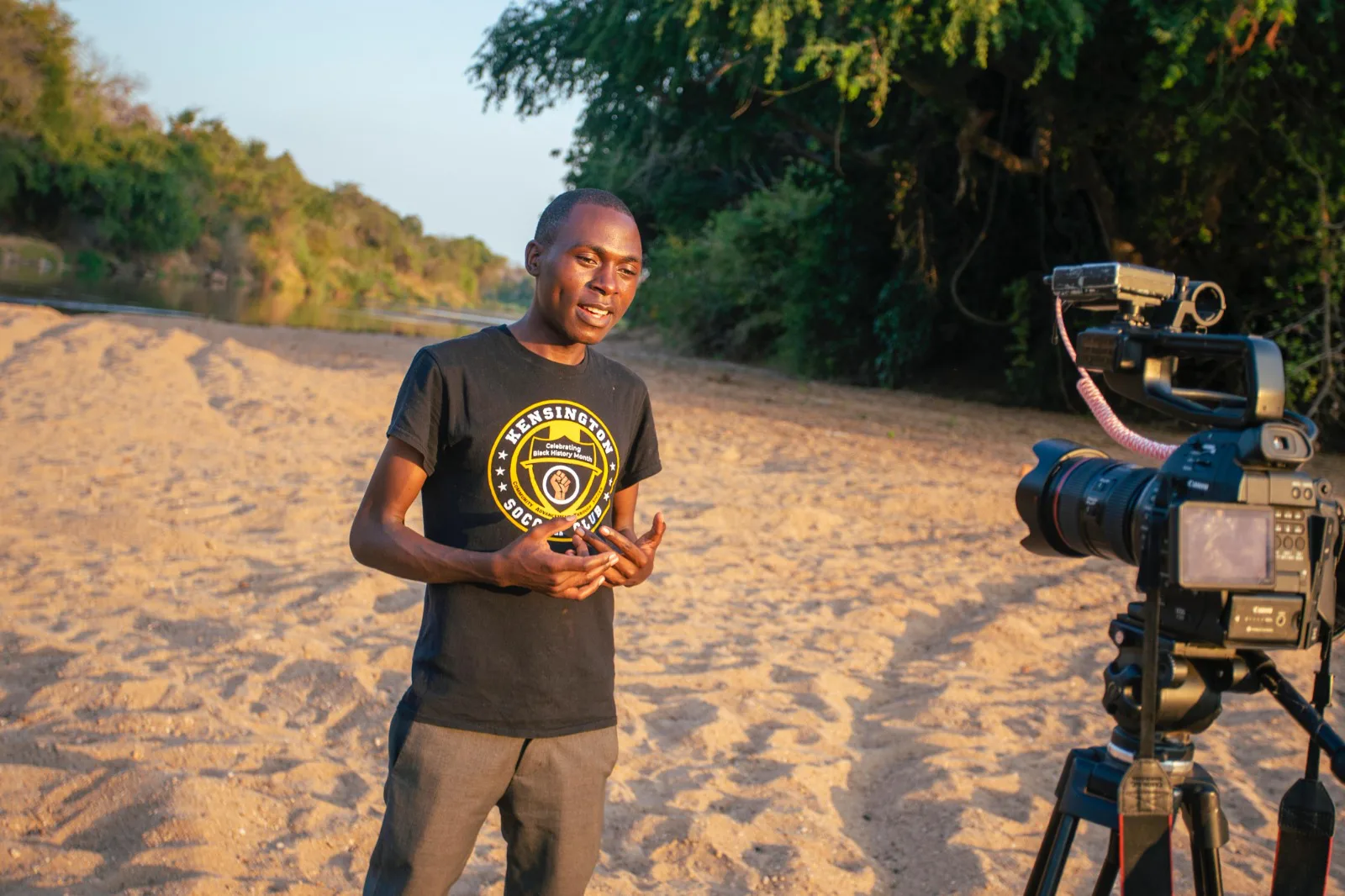
Two second-cohort fellows, Justina Mawindo Matandiko and Ronny Mukontwa, reflect this transformation in practice. Justina is a Copperbelt-based journalist working primarily with Radio Phoenix and contributing to other media platforms, with a strong focus on community-centred reporting. Ronny is a reporter at Chongwe Community Radio Station, where he reports for local audiences on issues that require clear, accurate, and accountable journalism.
Both entered the ECJ Fellowship with solid foundations in general journalism, but also with an awareness that environmental crime reporting required specialised skills. For Justina, the early days of the fellowship were eye-opening. She quickly realised that while she could report environmental stories, she lacked the technical grounding to fully interrogate them.
“Reporting on illegal mining, deforestation, and pollution often felt surface-level,” she reflects. “But I wasn’t fully equipped to connect the dots between local practices and legal frameworks.”
Ronny shared a similar challenge. He struggled to understand complex environmental terminology and translate it into something his audience could easily grasp. Investigative skills and safety measures were also gaps that limited how far he could push certain stories.
Through the ECJ training sessions, fieldwork, and expert-led mentorship, those gaps began to close for both of them. The fellowship curriculum is intentionally rigorous. Fellows are trained in investigative reporting techniques, environmental and wildlife law, data journalism, ethics, communication and personal safety. They learn how to verify information, analyse documents, interpret environmental data, and navigate high-risk reporting responsibly.
Both Justina and Ronny point to investigative techniques and environmental law as the most transformative aspects of the programme.
Understanding legislation such as the Environmental Management Act and the Wildlife Act enabled Ronny to critically examine decisions like the issuance of mineral exploration licences in sensitive Game Management Areas. “This knowledge empowered me to hold environmental offenders accountable and tell more impactful stories that spark debate and drive change,” he says.
For Justina, learning how to gather evidence and verify claims across multiple sources reshaped her confidence. Ethical reporting and safety training also changed how she approached sensitive investigations, ensuring that both sources and journalists remain protected.
But growth did not come without discomfort. A defining moment for Justina was her final investigative assignment under the fellowship, which examined pollution beyond the well-known Sino Metals spill. The story required her to approach authorities in three different towns and engage directly with affected communities.
“At first, I felt intimidated,” she admits. “But the experience taught me how critical journalists are in highlighting the consequences of environmental negligence.”
Ronny faced similar pressure while investigating a large-scale mineral exploration licence in Mpika’s Mukungule Game Management Area. Building trust with sources, securing documents, and questioning those in power pushed him beyond familiar reporting routines.
These assignments reshaped their understanding of environmental accountability, showing that reporting can drive public awareness, spark debate, and influence policy action.
The fellowship also came with real life skills acquisition. Balancing demanding investigative work with full-time reporting responsibilities tested both fellows professionally and personally. Securing interviews with authorities, managing risk, and meeting tight deadlines required discipline and resilience.
Mentorship played a crucial role in navigating these pressures. Guidance from trainers at Makanday, an investigative journalism media house and peers helped participants strategise, prioritise safety, and persist when doors seemed closed.
The ECJ Fellowship’s true success lies not only in the stories produced but in the journalists it has shaped. As graduation approaches, the fellows are aware that this is just the beginning.
For Justina, the fellowship has reshaped her entire career trajectory. She now approaches environmental stories with a solution-oriented lens, seeking to uncover root causes and systemic failures rather than isolated incidents. She sees new opportunities opening, locally and globally, as her work gains wider recognition.
Ronny echoes this sentiment. Armed with stronger investigative skills and legal knowledge, he is committed to continuing the fight for environmental justice through community-focused reporting.
Both believe journalists play an indispensable role in holding environmental offenders accountable by amplifying community voices, exposing illegal practices, and acting as a bridge between citizens and authorities.
0 Comments